Call Us : 08045476847
 English
 Spanish
 French
 German
 Italian
 Chinese (Simplified)
 Japanese
 Korean
 Arabic
 Portuguese
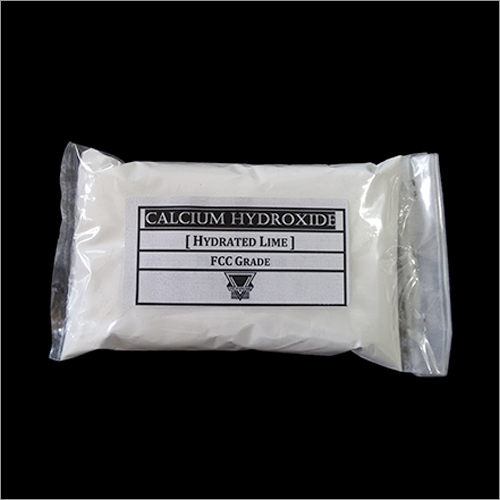
Calcium Hydroxide
6.00 - 50.00 INR/Kilograms
Product Details:
- Molecular Formula Ca(OH)
- Poisonous Yes
- Ph Level Approx. 12.4 (saturated solution)
- Smell Odorless
- Melting Point 580C (Decomposes)
- Molecular Weight 74.09 g/mol
- Structural Formula Ca(OH)
- Click to View more
X
Calcium Hydroxide Price And Quantity
- 1000 Kilograms
- 6.00 - 50.00 INR/Kilograms
Calcium Hydroxide Product Specifications
- Slightly soluble in water, insoluble in alcohol
- Slaked lime, hydrated lime, caustic lime
- Industrial, commercial, laboratory chemical, food additive (E526)
- 1305-62-0
- 28259040
- 215-137-3
- Industrial grade / Food grade / Laboratory grade
- 580C (Decomposes)
- 74.09 g/mol
- Ca(OH)
- Approx. 12.4 (saturated solution)
- Inorganic base
- Calcium Hydroxide
- Odorless
- Ca(OH)
- Yes
- Powder
- Calcium Hydroxide
- Conforms to IS:1540-1990 (or as per requirements)
- Chemical Compound
- Water treatment, soil stabilization, food industry, chemical manufacturing, construction, pharmaceuticals, flue gas treatment
- Not applicable (decomposes before boiling)
- Astringent, bitter
- Powder, granules
- 90%-99% (depending on grade)
- 2.24 Gram per cubic centimeter(g/cm3)
- Store in tightly closed container, in a cool dry place
Calcium Hydroxide Trade Information
- 1000 Kilograms Per Day
- 10 Days
Product Description
Calcium Hydroxide FCC Grade
"Calcium Hydroxide", having CAS-No: 1305-62-0, and traditionally being called hydrated lime or slaked lime, is an inorganic compound with the chemical formula as Ca(OH)2. It is free flowing super fine super white powder, free from grits & other contaminations and is obtained when calcium oxide (quicklime) is "slaked" with water, to form "Hydrated Lime". Calcium Hydroxide is used in a wide variety of traditional & emerging applications, because of its chemical & physical properties. These are high quality optimum products, compliant to various compendiums, being diligently processed under good manufacturing practices. These products are free from all known allergens and do not contain any prohibitory or toxic chemicals or non-kosher ingredients. The usual shelf life of the product is three to six months from the date of manufacturing of batch. This grade of Calcium Hydroxide shall be compliant to the core specifications & requirement of the Food Chemical Codex.
Uses
Vigyan Limes Calcium can be used in various manufacturing & other processes as under:-
Industrial Usage:
Vigyan Limes Calcium can be used in various manufacturing & other processes as under:-
Industrial Usage:
- Asphalt
- Buffing
- Refining
- Additives
- Metallurgy
- Construction
- Ore Concentration
- Refractory Cement
- Iron and Steel Industry
- Additives Functional Fillers
- Nonferrous Metals Industries
- Water Treatment
- Treat Waste Water
- Effluent Treatment
- Flue Gas Treatment
- Treat Animal Wastes
- Treat Hazardous Wastes
- Treat Bio-solids and Sludge
- Cosmetics
- Excipients
- Bulk Drugs
- Food Additives
- Fine Chemicals
- Live Stock Feed
- Food Fortification
- Acidity Regulators
- API Pharmaceuticals
- Nutritional Supplements
- Fusion
- Alkalis
- Citrates
- Nitrates
- Silicates
- Acetates
- Magnesia
- Stearates
- Aspirates
- Sulphates
- Agriculture
- Cyanamids
- Citric Acids
- Phosphates
- Propionates
- Calcium Carbide
- Plastic Stabilizers
- Moisture Removal
- Paints & Varnishes
- Grease & Lubricants
- Brake Pads & Linings
- Inks
- Papers
- Plastics
- Sealants
- Concrete
- Ceramics
- Adhesives
- Magnesium
- Desulphurization
- Building Materials
- Alumina & Bauxite
Product details
|
Types |
High Cal Lime |
|
Calcium Hydroxide |
Ca(OH)2 |
|
Whiteness |
97% |
|
Form |
Powder |
|
Packaging Type |
Bag |
|
Brand |
VIGYAN |
|
Usage/Application |
Food Processing Applications |
|
Purity |
0.95, 0.9, 0.98 |
|
Molar Mass |
74.09 |
|
Packaging Size |
40 Kg |
Wide Range of Applications
Calcium Hydroxides versatility makes it indispensable in diverse fields such as water treatment, flue gas scrubbing, construction, pharmaceuticals, and the food industry. Its ability to neutralize acids, stabilize soil, and participate in chemical synthesis drives its broad industrial adoption.
Quality and Storage Excellence
Supplied in high-purity forms (up to 99%), Calcium Hydroxide is packed in robust HDPE bags of 25 or 50 kg. Proper storage in tightly sealed containers, away from moisture and in cool, dry places, ensures maximum stability and a shelf life of up to 24 months from the manufacture date.
Safe Handling and Benefits
While non-poisonous, Calcium Hydroxide is caustic and can cause severe skin burns or eye damage. Always wear protective equipment when handling. Its benefits include efficient pH adjustment, pollution control, and food-grade uses as permitted, contributing to safe water and better construction materials.
FAQs of Calcium Hydroxide:
Q: How is Calcium Hydroxide produced?
A: Calcium Hydroxide is produced by hydrating quicklime (calcium oxide, CaO) through a chemical process called slaking. The quicklime reacts with water to form calcium hydroxide, commonly known as slaked lime or hydrated lime.Q: What are the main industrial uses of Calcium Hydroxide?
A: Calcium Hydroxide is widely applied in water treatment, soil stabilization, flue gas treatment, chemical manufacturing, pharmaceuticals, the food industry (as E526), and construction. Its high alkalinity makes it valuable for neutralization and purification processes.Q: When should Calcium Hydroxide be handled with extra caution?
A: Calcium Hydroxide should always be handled with care, especially during transfer, mixing, or application. It is caustic and causes severe skin burns or eye injury, so protective gloves, goggles, and clothing should be used. Avoid direct contact with skin or eyes at all times.Q: Where should Calcium Hydroxide be stored for optimal stability?
A: Store Calcium Hydroxide in tightly closed containers made of chemically resistant materials like HDPE. The storage area should be cool, dry, and well-ventilated to prevent moisture absorption and degradation, maintaining product quality for up to 24 months.Q: What are the benefits of using Calcium Hydroxide in water treatment?
A: In water treatment, Calcium Hydroxide efficiently neutralizes acidic impurities, softens water by precipitating excess minerals, and aids in removing heavy metals. This ensures safer, cleaner water for industrial and municipal use.Q: How does particle size and purity affect Calcium Hydroxides performance?
A: Calcium Hydroxide with finer particle size (200-325 mesh) and higher purity (90%-99%) offers better reactivity and consistency in applications such as chemical processes, food production, or environmental treatment, ensuring effective results and process stability.Tell us about your requirement

Price:
Quantity
Select Unit
- 50
- 100
- 200
- 250
- 500
- 1000+
Additional detail
Mobile number
Email

Other Products in 'Calcium Hydroxide' category


Vigyan Lime & Chemicals
Dehradun, Uttarakhand, India.
Dehradun, Uttarakhand, India.
Address
- G-37, Race Course,Dehradun - 248001, Uttarakhand, India
- Phone : 08045476847
Key Person
- Mr Sunil Kumar Gupta (Managing Director)
- Mobile : 08045476847
- Send Inquiry
 Send Inquiry
 |
VIGYAN LIME
All Rights Reserved.(Terms of Use) Developed and Managed by Infocom Network Private Limited. |
