Call Us : 08045476847
 English
 Spanish
 French
 German
 Italian
 Chinese (Simplified)
 Japanese
 Korean
 Arabic
 Portuguese
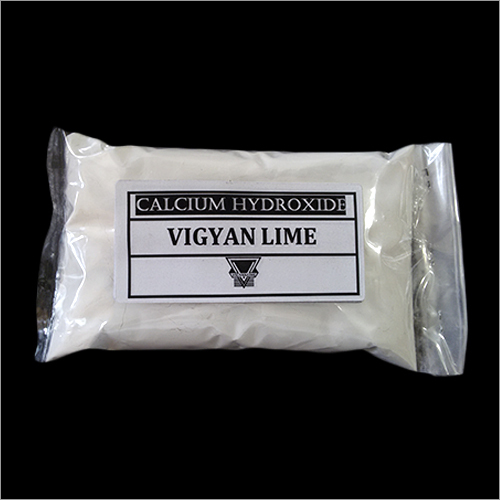
Calcium Hydroxide
6.00 - 50.00 INR/Kilograms
Product Details:
- Refractive Rate 1.574
- Other Names Slaked Lime, Hydrated Lime, Caustic Lime
- Density 2.24 Gram per cubic centimeter(g/cm3)
- Purity >95%
- Poisonous Yes
- Ph Level ~12.4 (saturated solution)
- Boiling point Decomposes before boiling
- Click to View more
X
Calcium Hydroxide Price And Quantity
- 1000 Kilograms
- 6.00 - 50.00 INR/Kilograms
Calcium Hydroxide Product Specifications
- White powder or crystalline
- Alkali
- Slightly soluble in water, insoluble in alcohol
- 74.09 g/mol
- Inorganic Chemical
- Used as a flocculant, neutralizing agent, and disinfectant
- 215-137-3
- Keep tightly sealed, store in a dry and cool place
- Ca(OH)
- Ca(OH)
- Water treatment, construction, food industry, agriculture, pH regulation
- Odorless
- Calcium Hydroxide
- Powder
- 28259040
- 580C (decomposes)
- Alkaline, slightly bitter
- 1.574
- Slaked Lime, Hydrated Lime, Caustic Lime
- Industrial Grade, Food Grade
- 2.24 Gram per cubic centimeter(g/cm3)
- >95%
- Yes
- Calcium oxide (from which it is derived)
- ~12.4 (saturated solution)
- Conforms to industrial and food grade standards
- Decomposes before boiling
- 1305-62-0
Calcium Hydroxide Trade Information
- 1000 Kilograms Per Day
- 10 Days
Product Description
Uses
Vigyan Limes Calcium Hydroxide can be used in various manufacturing & other processes as under:-
Industrial Usage:
Vigyan Limes Calcium Hydroxide can be used in various manufacturing & other processes as under:-
Industrial Usage:
- Asphalt
- Buffing
- Refining
- Additives
- Metallurgy
- Construction
- Ore Concentration
- Refractory Cement
- Iron and Steel Industry
- Additives Functional Fillers
- Nonferrous Metals Industries
- Water Treatment
- Treat Waste Water
- Effluent Treatment
- Flue Gas Treatment
- Treat Animal Wastes
- Treat Hazardous Wastes
- Treat Bio-solids and Sludge
- Cosmetics
- Excipients
- Bulk Drugs
- Food Additives
- Fine Chemicals
- Live Stock Feed
- Food Fortification
- Acidity Regulators
- API Pharmaceuticals
- Nutritional Supplements
- Fusion
- Alkalis
- Citrates
- Nitrates
- Silicates
- Acetates
- Magnesia
- Stearates
- Aspirates
- Sulphates
- Agriculture
- Cyanamids
- Citric Acids
- Phosphates
- Propionates
- Calcium Carbide
- Plastic Stabilizers
- Moisture Removal
- Paints & Varnishes
- Grease & Lubricants
- Brake Pads & Linings
- Inks
- Papers
- Plastics
- Sealants
- Concrete
- Ceramics
- Adhesives
- Magnesium
- Desulphurization
- Building Materials
- Alumina & Bauxite
Versatile Applications Across Industries
Calcium Hydroxide is a vital additive in water purification, construction, food processing, agriculture, and pH regulation. Its flocculating and neutralizing abilities make it indispensable for removing impurities, stabilizing soils, processing food, regulating acidity, and disinfecting surfaces. Its multi-industry utility ensures consistent demand among manufacturers, exporters, and suppliers.
Safety and Handling Precautions
Handling Calcium Hydroxide requires care, as it can cause severe skin burns and eye damage. Protective equipment such as gloves, goggles, and masks must be used during contact. Proper storage in tightly sealed containers within cool, dry environments helps maintain product quality and safety, preventing moisture absorption and chemical degradation.
Packaging and Shelf Life Details
Available in 25 kg and 50 kg high-density polyethylene (HDPE) bags, Calcium Hydroxide is packaged to ensure long-term stability. The product boasts a 12-month shelf life when kept in its original, unopened packaging. Distributors and suppliers also offer customized packaging solutions to fit specific end-user requirements.
FAQs of Calcium Hydroxide:
Q: How should Calcium Hydroxide be stored to maintain its quality?
A: Store Calcium Hydroxide in tightly sealed containers in a cool, dry location. Exposure to moisture and air should be avoided to preserve its chemical stability and effectiveness for up to 12 months.Q: What are the main benefits of using Calcium Hydroxide in water treatment?
A: Calcium Hydroxide acts as a powerful flocculant and neutralizing agent in water treatment processes. It enhances water clarity, removes impurities, and helps regulate pH, making treated water safer and compliant with regulatory standards.Q: When is Calcium Hydroxide typically used in the food industry?
A: In the food sector, Calcium Hydroxide is employed for pH regulation, fortification, and as a processing aid. It is used, for instance, in the preparation of corn tortillas and as a firming agent in canned vegetables, conforming to food-grade standards.Q: Where is Calcium Hydroxide commonly applied in construction?
A: It is extensively used in construction for soil stabilization, mortar, plaster, and as an additive in cement. Calcium Hydroxide improves workability, enhances durability, and supports structural stability in building applications.Q: What is the typical process for using Calcium Hydroxide as a flocculant?
A: Calcium Hydroxide is dissolved or dispersed in water to create a slurry, which is then introduced to the liquid requiring treatment. It reacts with contaminants, forming clumps (flocs) that are easier to remove through filtration or sedimentation.Q: How can users safely handle Calcium Hydroxide?
A: Personnel should wear appropriate protective gear, including gloves, goggles, and masks, to prevent skin and eye contact. Immediate rinsing with water is essential in case of accidental exposure, and affected clothing should be removed.Tell us about your requirement

Price:
Quantity
Select Unit
- 50
- 100
- 200
- 250
- 500
- 1000+
Additional detail
Mobile number
Email

Other Products in 'Calcium Hydroxide' category


Vigyan Lime & Chemicals
Dehradun, Uttarakhand, India.
Dehradun, Uttarakhand, India.
Address
- G-37, Race Course,Dehradun - 248001, Uttarakhand, India
- Phone : 08045476847
Key Person
- Mr Sunil Kumar Gupta (Managing Director)
- Mobile : 08045476847
- Send Inquiry
 Send Inquiry
 |
VIGYAN LIME
All Rights Reserved.(Terms of Use) Developed and Managed by Infocom Network Private Limited. |
